The Pages Inside the Case: How Criterion's Essay Booklets Became Their Own Art Form
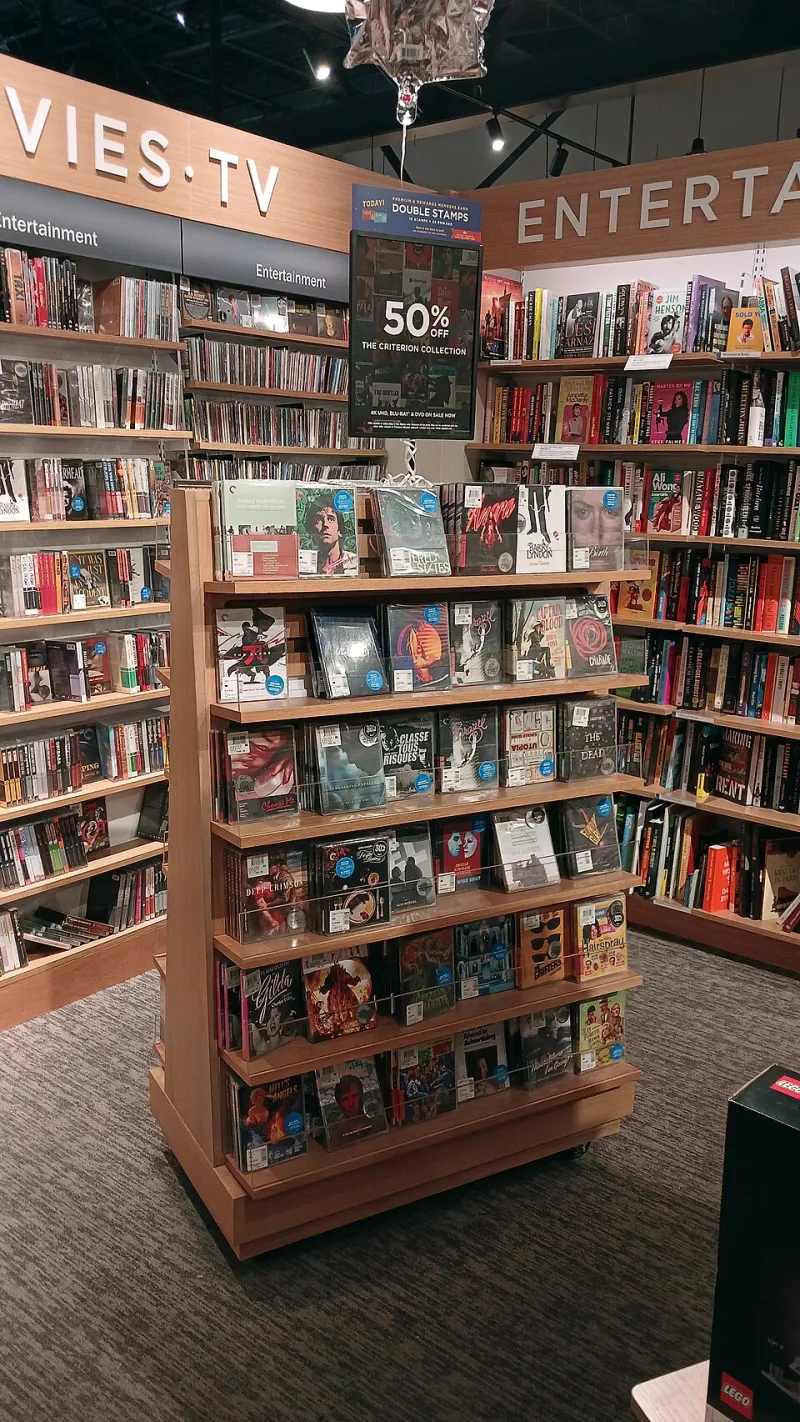
Photo: MatthewHoobin, CC0, via Wikimedia Commons
There's a specific kind of collector behavior that doesn't get talked about enough. You pull a Criterion spine off the shelf, crack the case, and before the disc even comes out, you're already reading. Not the back cover blurb. The booklet. Twenty, thirty, sometimes fifty pages of dense critical writing tucked into a format most people treat like a packing insert. This is where things get interesting.
Because here's the thing — for a significant chunk of Criterion's catalog, the essay is doing heavier lifting than anything on the disc.
What Even Is a Criterion Booklet?
If you've never held one, the basic concept sounds almost quaint. Every Criterion Collection release ships with a printed booklet containing at least one substantial essay about the film. Sometimes it's a single commissioned piece from a working critic. Sometimes it's a small anthology — a new essay, a reprinted interview, a director's note, maybe something pulled from a film journal that most people would never encounter otherwise.
The contributors list over the years reads like a syllabus for a grad school film seminar. Jonathan Rosenbaum. Terrence Rafferty. Gary Giddins stepping outside jazz to write about cinema. J. Hoberman. bell hooks. Kent Jones. These aren't promotional blurbs. These are fully realized critical arguments, sometimes running thousands of words, making the case for why a film matters in ways the film itself can't always make for itself.
And here's the quiet truth that collectors have been sitting on for years: some of those essays are genuinely more compelling than the movies they accompany.
When the Writing Outgrows the Film
Take any mid-tier Criterion release — not the Kubricks and Bergmans that sell themselves, but the deeper cuts. The obscure Italian genre pictures. The overlooked American independents from the '70s that never quite found their audience. The foreign-language films that got a theatrical run in maybe four cities.
For films like these, the booklet essay isn't supplementary. It's load-bearing. It's the document that explains why you should care, that builds the historical context the film can't provide on its own, that connects a 1963 Taiwanese melodrama to everything happening in world cinema at that exact moment. Without the essay, you're watching something beautiful and slightly baffling. With it, you're watching something that suddenly has weight and address.
The critic Michael Atkinson wrote a booklet essay for a Criterion release years back that was so precisely argued, so alive with genuine obsession, that people in collector circles started referencing it in conversations where the film itself barely came up. The essay had become the thing. The film was almost incidental — a prompt that unlocked something the writing needed to say.
That's a weird inversion. And it happens more than anyone officially acknowledges.
The Format That Made It Possible
Physical media created a container for this kind of writing that nothing in the streaming era has figured out how to replicate. When you buy a disc, you're buying an object. Objects have space. Space invites inclusion. A booklet fits naturally inside a case in a way that a PDF link in a streaming app's "more info" section never will.
Criterion understood this intuitively. The booklet wasn't an afterthought — it was part of the value proposition from the beginning. You weren't just buying the film. You were buying a curated experience that treated the film as the starting point for a larger conversation. The essay was the invitation to keep going after the credits rolled.
Streaming killed that almost completely. When Criterion launched its Channel, the essays migrated online — technically accessible, practically invisible. Nobody scrolls to the supplementary reading after queuing up a movie on a streaming platform. The behavior doesn't exist. The friction is gone, and so is the ritual.
Collectors who came up in the DVD era remember the specific experience of reading the booklet first, sometimes before even watching the film. That sequencing mattered. It primed you differently. You arrived at the movie already in conversation with it.
The Essays That Collectors Actually Trade
In certain corners of the collector community — the kind that shows up in forum threads and Discord servers dedicated to physical media — specific Criterion booklets have developed their own reputations. People ask about them by name. Someone will mention they're hunting a particular out-of-print spine primarily because the accompanying essay by a specific critic is nearly impossible to find reprinted anywhere else.
This is the secondary art form in action. The essay exists only in this one physical object, in a print run that stopped years ago, tucked inside a case that itself might be in rough shape. The writing is effectively rare. It has provenance. It has the specific gravity that comes from being attached to a physical thing that not many people own.
Some of the most sought-after examples are the booklets that contain writing by filmmakers about other filmmakers. Directors on directors. The critical intelligence of someone who actually makes movies applied to the work of a peer or an influence. These pieces tend to be sharper and stranger than traditional criticism — less interested in academic framework, more interested in the specific technical and emotional problems the film is solving.
Agnès Varda on Vigo. Paul Schrader on Bresson. The writing that comes out of those encounters is something different. It's not reviewing. It's more like recognition.
What Gets Lost When the Booklet Disappears
The real argument here isn't just nostalgia for physical media. It's about what kind of writing a format makes possible.
Criterion booklet essays existed in a specific productive tension: they had to be substantial enough to justify the inclusion, accessible enough to work for a general cinephile audience, and specific enough to actually illuminate this particular film. That's a genuinely difficult brief. The writers who met it consistently — who could write twenty pages about a 1958 Japanese melodrama and make you feel like you'd been let in on something — were doing something that doesn't have a clean analog in current film writing.
Long-form criticism exists online. Film essays exist. But they don't have the same relationship to an object, to a physical container that someone paid money for and chose to bring home. The stakes are different when the writing lives inside something tangible.
There's a generation of film obsessives in this country whose critical education came substantially from Criterion booklets. Who learned how to watch movies by reading people who knew how to think about them, in the quiet after the credits, holding a few folded pages under a lamp. That's a specific kind of formation. And it's not being replaced by anything.
The discs are still out there. The booklets are still inside them. Pull one off the shelf sometime and read it before you press play. See what happens.