The Discs You Can Own But Never Watch: Inside America's Import Collecting Underground

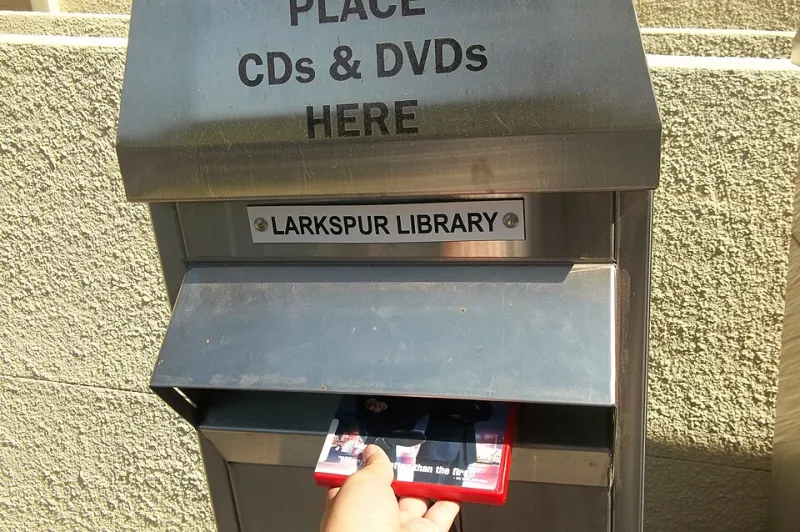
Photo: Justin Burris, CC BY 3.0, via Wikimedia Commons
Somewhere in America right now, a collector is holding a gorgeous, shrink-wrapped edition of a film that changed their life — a Japanese release with beautiful packaging, a superior transfer, hours of supplements. And for years, that disc sat on their shelf as pure sculpture, because their American player refused to read it.
Welcome to region coding, the anti-piracy measure that accidentally created a class of film collectors who own movies they can't watch.
A Problem Invented on Purpose
Quick refresher for the uninitiated: when DVDs took over in the late '90s, the studios divided the world into region codes. Discs pressed for Japan (region 2) wouldn't play on American machines (region 1), and so on. The official reasoning was staggered release windows — so a movie hitting theaters in Paris couldn't be bought on disc in Chicago first. The actual effect, decades later, is that the country with the largest home entertainment market on earth is locked out of huge portions of the world's cinema on disc.
Blu-ray softened the scheme but didn't kill it. Region A covers the Americas and parts of Asia; region B is Europe; region C is elsewhere. And while a meaningful chunk of international releases — particularly from the UK boutique labels — are region-free, plenty of the most desirable editions are not.
The Hardware Workaround Economy
The American response has been characteristically entrepreneurial. A whole market exists for region-free players: some sold openly by specialty retailers, some standard models that hobbyists have figured out how to unlock with remote-control button sequences that circulate on forums like folklore. There are players that are region-free out of the box because their manufacturers never saw the point of the restriction. There are firmware hacks. There are disc drives that, paired with the right software, quietly ignore the whole scheme.
None of this is piracy. Importing a legitimately purchased disc from another country for personal use occupies a legal grey zone that's more grey than zone — but the collectors involved are, if anything, the most law-abiding segment of the physical media world. They're paying premium prices, often double or triple the American equivalent, for editions that may never cross the Atlantic.
Why Bother?
Fair question. The answer is that for a shocking number of films, there is no American release. Not a delayed one. Not a streaming one. Nothing.
Foreign labels regularly restore and release films that no US distributor has touched in decades — or ever. A restored Thai crime drama, a complete works box of a Brazilian director, a Japanese TV series that never aired here: these exist as discs in Tokyo or Bologna and exist nowhere else. Meanwhile, streaming has made the problem worse, not better. The big platforms license content territory by territory, so the version of Netflix you get in Ohio is a shadow of what's available in Seoul. Physical imports are the only way around a wall that streaming built.
There's also the quality question, which import collectors will happily lecture you about at length. The French and Japanese editions of certain Hollywood classics have, at various points, sported better transfers than their domestic counterparts. Supplements get lost in licensing translation. Censorship cuts differ by territory. If you care about the film itself, the best version of it may legally live an ocean away.
The Grey Market Ghetto
The import scene has its own infrastructure now: specialist online retailers who handle overseas shipping, collector communities that flag price drops on foreign storefronts, translation guides for navigating Japanese pre-order systems. Buying from overseas marketplaces has become routine enough that the barrier to entry is basically just patience and a willingness to wait three weeks for shipping.
The culture that's grown around it is a mix of film scholarship and hardware tinkering. Ask an import collector what they're watching and you'll get two answers: the movie, and the machine they finally got to play it on.
The Absurdity, Acknowledged
Even people deep in this hobby will admit the whole thing is ridiculous. A global market for physical media, sabotaged by a DRM scheme from the Clinton administration, kept alive by hobbyists soldering around the restrictions. If the studios wanted to kill the used-disc market, they've instead created a transnational class of super-buyers who will pay anything for an edition their own country won't sell them.
The discs keep coming, the workarounds keep working, and the shelf keeps growing — one unplayable masterpiece at a time.