Shelf as Canvas: The Criterion Collectors Turning Their Living Rooms Into Art Installations
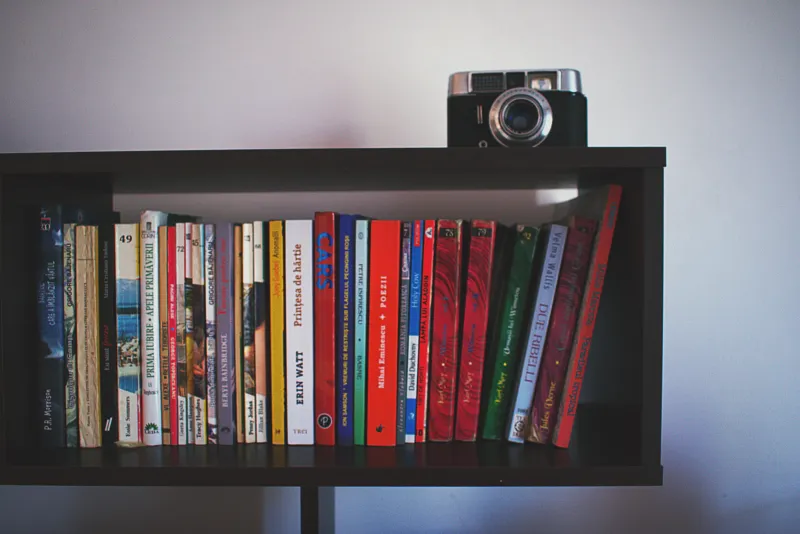
There's a guy in Portland who spent eleven days rearranging his Criterion shelf before he posted a single photo of it. Not eleven days total — eleven consecutive days of moving, reconsidering, re-lighting, and starting over. The final image he posted got four hundred likes and a comment from another collector that just said "the Tati placement is perfect." He replied with a single period.
This is where we are now.
The Shelf Is Not Just a Shelf
Criterion has always understood that packaging is part of the product. The spine numbers, the commissioned cover art, the weight of the cases, the booklets tucked inside — none of it happened by accident. The company has spent decades treating physical media like it deserves to be handled with care, and a specific kind of collector absorbed that message so completely that they started applying it to how they store and display the things they buy.
What started as basic organizational pride — alphabetical, then by spine number, then by director — has evolved into something harder to categorize. Call it obsessive curation. Call it domestic installation art. Call it a very expensive hobby that looks incredible on a grid feed. Whatever you call it, there's a growing community of collectors who treat the arrangement of their Criterion releases as a creative act in itself, one that involves lighting rigs, custom shelving, color theory, and a level of thematic thinking that would make a museum curator take notes.
The Instagram accounts dedicated to this stuff are genuinely striking. You'll see shelves where every visible spine has been grouped by the dominant color in its cover design, creating these long horizontal gradients that run from pale gray through deep burgundy. You'll see thematic clusters — all the Bergman releases anchoring one end, all the Agnès Varda titles arranged in a kind of visual conversation with each other. Some collectors have started pulling the discs out of their cases entirely and displaying the packaging as flat objects, propped up like framed prints against the back of a shelf.
The Psychology of the Perfect Arrangement
Ask any of these collectors why they do it and you'll get answers that range from "I just like it to look nice" to full-on explanations about the relationship between physical objects and memory, about how seeing a spine triggers the experience of watching the film, about how the shelf becomes a kind of autobiography.
That last part lands. There's something genuinely meaningful about a shelf that reflects not just what you own but what you've prioritized, what you've sought out, what you were thinking about during different periods of your life. The collector who bought the Cassavetes box set during a breakup and now can't look at it without feeling something — that's not a trivial relationship to an object. The person who tracked down a specific pressing of a Kiarostami title for two years and then placed it in the exact center of their display because it earned that spot — that's a kind of meaning-making that's hard to dismiss.
The Instagram side of things adds a performance layer that some collectors find energizing and others find slightly uncomfortable. Posting your shelf is an act of curation twice over — you're arranging the physical objects, and then you're deciding how to present that arrangement to an audience. The lighting choices alone can take hours. Warm tungsten to give everything an amber, lived-in glow. Cooler daylight to make the cover art pop with more accuracy. Some people use LED strips mounted behind the shelving itself, creating a backlit effect that makes the whole thing look like it belongs in a boutique hotel lobby.
Spine Numbers as Sculptural Logic
One thing that keeps coming up in conversations with these collectors is the significance of the spine numbers themselves — not as a cataloging system, but as a visual and conceptual element. The numbers run sequentially, which means a shelf organized by spine number has a kind of built-in narrative logic: you're watching the collection grow chronologically, early acquisitions sitting next to later ones based on when Criterion decided to release them rather than anything intrinsic about the films.
Some collectors find this order deeply satisfying, almost meditative. Others find it actively wrong — they want their shelves to reflect their logic, not Criterion's release schedule. The tension between these two approaches has spawned entire threads in collector forums, debates that get surprisingly heated for arguments about where to put a Blu-ray case.
Then there are the collectors who've started building what they call "dioramas" — a term borrowed loosely from natural history museums. These are deliberate thematic scenes within the larger shelf, where specific releases are grouped not by director or color or spine number, but by some conceptual thread that only makes full sense to the person who built it. A cluster of films about grief. A row of movies set in Tokyo. Every release that features a specific cinematographer's work. The diorama logic is personal, sometimes private, and occasionally explained in caption-length essays beneath the Instagram posts.
When Display Becomes Documentation
What's interesting about the photo documentation aspect is that it's created a record of something that's genuinely ephemeral. Shelves get rearranged. Collections get sold or dispersed. People move, and the new apartment doesn't have the same wall space. The photos preserve a version of the shelf that no longer exists, which gives them a quality that goes beyond simple flex posting.
Some of the more thoughtful accounts treat this explicitly — posting old shelf photos with captions that note what's changed, which titles have been added or removed, how the thinking behind the arrangement has shifted. It becomes a kind of ongoing journal, one where the entries are made of other people's art and your own choices about how to live with it.
Nobody Told Them To Do This
The thing that makes this whole subculture feel genuinely interesting rather than just expensive is that nobody asked for it. Criterion didn't launch a hashtag campaign. There's no official community manager pushing people to post their shelves. This emerged entirely from the logic of the objects themselves — beautiful things that reward attention, that accumulate into something that starts to feel like it deserves a considered presentation.
The collectors doing this aren't waiting for permission or validation from the company that made the discs. They've decided, on their own, that the act of display is meaningful. That where you put something, and how you light it, and what you put next to it — all of that says something real.
The guy in Portland is already rearranging again. He got a new release last week and the spine color is throwing off the gradient section. Eleven more days, probably.