Forget the Spine Number: How Steelbook Culture Built a Whole New Collecting Religion
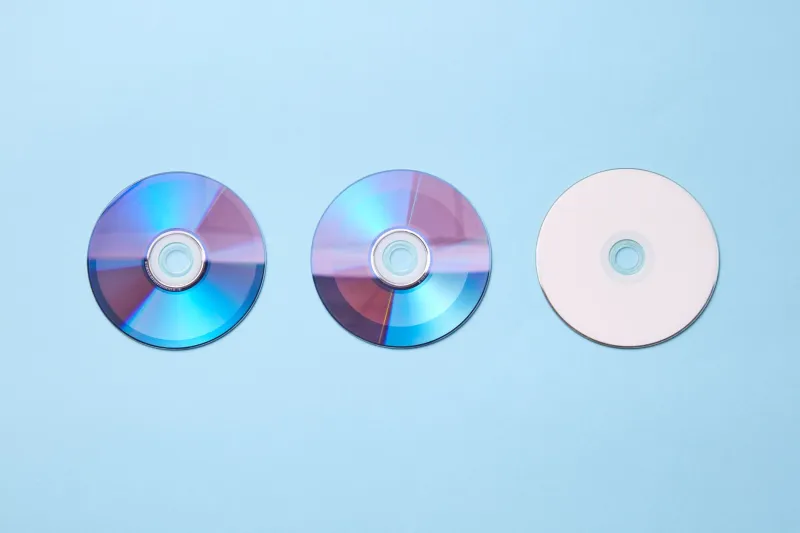
Walk into the apartment of a serious steelbook collector and the first thing you notice is that it doesn't look like a film studies classroom. There are no white spines lined up in careful numerical order. There's no bookshelf that reads like a syllabus. What you're looking at is closer to a record collector's setup — dense, colorful, organized by some internal logic that takes a minute to decode. The cases are metallic. The artwork is aggressive. Some of them glow under the right light.
Ask the person who owns it what they think of Criterion and you might get a shrug. Maybe mild appreciation. Maybe something more pointed. What you probably won't get is reverence.
That's the story of physical media collecting in 2024, and it's a more interesting story than the discourse usually acknowledges.
The Canon That Wasn't Universal
Criterion built its authority on a specific premise: that certain films matter more than others, that restoration and scholarship are inseparable from appreciation, and that the collector's job is to receive that judgment and organize their shelf accordingly. For a generation of cinephiles who came up through video stores and film school syllabi, this was self-evidently correct.
For the generation that came up through Reddit, YouTube video essays, and Best Buy's import section — not so much.
The younger collector cohort didn't experience Criterion as a discovery engine. By the time they got into physical media seriously, the titles they cared about weren't necessarily the ones on those white spines. They wanted the Marvel movies in premium packaging. They wanted the John Carpenter back catalog in a case that looked like it belonged in a gallery. They wanted Mad Max: Fury Road in a steelbook that justified owning a physical copy when they already had it on three streaming services.
Criterion had no answer for any of that. It wasn't trying to.
What Steelbooks Actually Offer
The honest case for steelbooks isn't that they're archivally superior. It's that they're honest about what collecting actually is for a lot of people.
Collecting is about the object. It's about having a thing that communicates your taste, your identity, your willingness to spend real money on something you could access for free. The steelbook delivers that signal more directly than almost any other format. It's metal. It's heavy. The embossing is tactile. When you pull it off the shelf, it feels like it cost what it cost.
Labels like Zavvi, Best Buy's exclusive line, and the various region-specific pressings from distributors like Shout Factory and Arrow have built entire economies around this. Limited runs. Retailer exclusives. Variants with different artwork. The same mechanisms that make sneaker collecting and vinyl collecting function — scarcity, aesthetics, community gatekeeping — applied to Blu-ray cases.
The collector who spent $80 on a steelbook edition of a film they already owned on standard Blu-ray isn't confused about what they're doing. They're buying the object. The film is almost incidental.
The Backlash Against Curatorial Authority
There's also something more pointed going on beneath the surface. The Criterion model assumes that someone — a label, a curator, an institution — gets to decide which films are worth serious attention. That authority was mostly unchallenged when the alternatives were limited. When the competition was a bare-bones Universal DVD with no extras and a bad transfer, Criterion's scholarly apparatus looked like a genuine value proposition.
But the boutique label explosion of the last decade changed the calculus. Arrow Video, Vinegar Syndrome, Kino Lorber, Severin Films — these labels brought the same restoration rigor and supplementary material to genres Criterion had historically ignored. Horror. Exploitation. Grindhouse. International genre cinema. The message was implicit but clear: the gatekeeping was always a choice, not a necessity.
Steelbook culture took that critique a step further. If Arrow could treat a 1970s Italian giallo with the same care Criterion gave Bergman, then maybe the whole hierarchy was just taste dressed up as scholarship. And if it's just taste, your taste is as valid as anyone's.
The collectors who built their shelves around steelbooks weren't rejecting quality. They were rejecting the idea that someone else got to define it.
The New Grail Economy
Every collecting culture develops its grails — the objects that function as ultimate status markers, the ones that separate serious collectors from casual ones. For Criterion obsessives, it's the out-of-print early spines, the misprint errors, the foreign pressings with exclusive content.
Steelbook culture has its own version. The Best Buy exclusive that sold out in four hours. The UK import with the variant artwork that never got a US release. The limited-run anniversary edition that came in a numbered slipcase with a booklet. These objects circulate on eBay and in Facebook groups with the same energy as any other collector's market.
The difference is that the steelbook grail is almost never about the film's historical significance. It's about the object's scarcity and visual impact. A steelbook of a middling action sequel can be worth more than a first-pressing criterion of a canonized masterpiece, purely because the steelbook is rarer and looks better on a shelf.
To the Criterion collector, this is slightly baffling. To the steelbook collector, it makes perfect sense.
Two Shelves, One Culture
What's interesting is how little these two collecting communities actually fight. They exist in parallel, occasionally overlapping — plenty of collectors have both — but largely operating by different rules and pursuing different satisfactions.
The Criterion collector is, at some level, building an argument. The shelf is a position on film history. The steelbook collector is building an aesthetic. The shelf is a gallery.
Neither is wrong. Both are a little obsessive in ways that outsiders find difficult to explain. And both are, in their own way, pushing back against the streaming-era logic that says you don't need to own anything because everything is always available somewhere.
The steelbook crowd just does it louder, with better lighting and significantly more chrome.