Still Sealed, Still Watching: How the Shrink Wrap Became the Point
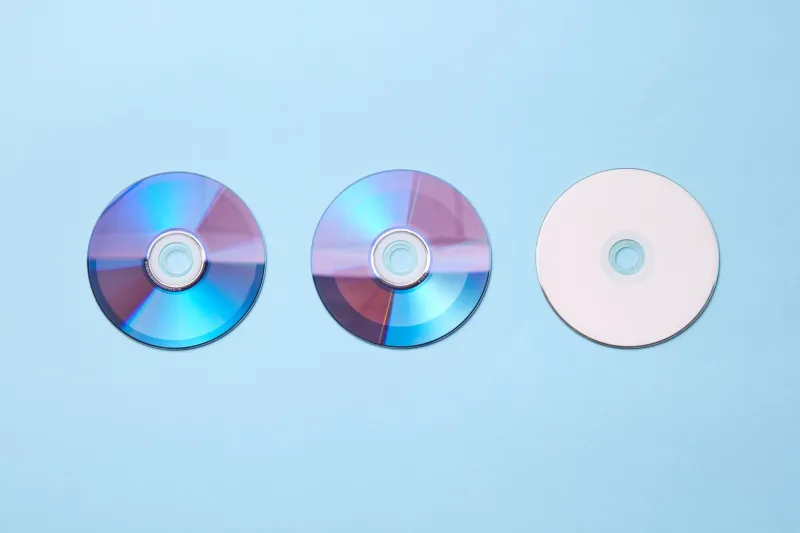
Somewhere in an apartment in Portland, there's a shelf that took two hours to arrange. The lighting was dialed in with a clip-on LED bar. The spines are alphabetized, or maybe organized by release number — the owner went back and forth on this. Every case is sealed. Every case has been sealed for months, some for over a year. The owner has watched maybe a third of these films, but not from these copies. They streamed them. They used a library disc. They borrowed a friend's.
The physical copies are for something else entirely.
This isn't a fringe phenomenon anymore. Inside Criterion collector communities — subreddits, Discord servers, the comment sections of unboxing videos that somehow pull six-figure view counts — there's a growing and quietly uncomfortable conversation about what it actually means to own one of these things.
The Ritual That Got Photographed to Death
Ask collectors who were buying Criterion in the early 2000s what opening a new disc felt like, and they get a little nostalgic in a way that has nothing to do with nostalgia for the film itself. There was a specific sequence: the plastic coming off in one clean strip if you were lucky, the weight of the case, cracking the booklet to find an essay by some film scholar you'd never heard of but were about to read in full. The disc was the destination, but the unpacking was the journey.
Then came the phones. Then came the feeds.
The unboxing video as a format predates Criterion's current collector boom by about a decade — tech products, sneakers, trading cards — but it landed in the boutique home video space with a particular force. Because Criterion, Arrow, Kino Lorber, Indicator — these labels put genuine craft into their packaging. The spine art, the slipcovers, the insert cards, the booklets. There's real visual material to work with. An unboxing video for a new Criterion spine can be genuinely satisfying to watch, and a lot of people figured that out.
The problem is what happened to the collector once the camera became part of the equation.
"I caught myself staging the opening," says Marcus, a collector in his late thirties based in Atlanta who's been buying Criterion since his college film program days. "Like, I'd do a dry run first to figure out the angle, and then I'd do it again for the video. And at some point I realized the second opening wasn't really an opening anymore. I was performing it."
Marcus stopped posting unboxing content about eighteen months ago. He still buys. He still opens everything. But he says the period where he was documenting his purchases changed something about how he related to the objects — and not in a direction he liked.
The Sealed Copy as Status Object
There's a harder conversation underneath the unboxing culture critique, and it's about money and status and the way collector communities sometimes quietly reorder their own values.
A sealed Criterion — especially a spine number that's gone out of print — carries a price premium that an opened copy simply doesn't. This is basic collectibles logic, the same reason a graded comic book in a plastic slab sells for more than one you've actually read. The market rewards preservation. And once the market rewards something, the community builds a story around why that thing is actually the right way to engage.
So you get collectors who will tell you, with complete sincerity, that keeping a disc sealed is a form of respect. That the object deserves to be preserved. That they'll open it someday, when the time is right.
Sometimes the time never comes.
"I have a sealed copy of the Wanda spine that I've owned for four years," says Diane, a collector and film programmer in Chicago. "I've seen the film three times. I love the film. I tell myself I'm saving the copy for — I don't even know. A special occasion? It's a movie. There is no special occasion." She laughs, but there's something a little tired in it. "I think I just don't want to depreciate it."
That word — depreciate — is doing a lot of work. It's financial language applied to a cultural object, and it reveals exactly where the values have quietly shifted.
What You're Actually Not Getting
Here's what's inside a sealed Criterion that you don't get until you open it: the booklet essay, which is sometimes genuinely great writing about the film and its context. The insert cards. The audio commentary, which you have to load the disc to access. The supplemental interviews, the short films, the archival footage. The second disc, if there is one.
Criterion spends real money on this stuff. They commission original essays. They restore archival materials. They track down directors who haven't talked about a film in twenty years and get them on camera. The supplements on a well-produced Criterion spine can add up to three or four hours of additional content — context that genuinely changes how you understand the feature.
None of that is visible through the shrink wrap.
"The booklets are the thing I miss most when I don't open something," says Marcus. "I've read some genuinely life-changing essays in those things. Stuff that sent me down months-long rabbit holes. And all of that is just sitting there in a case I won't open because I'm worried about resale value on something I have no intention of selling."
The irony is almost too clean: the thing that made Criterion worth collecting — the obsessive, scholarly, material commitment to cinema as a serious art form — gets bypassed entirely when the physical object becomes a display piece rather than a delivery mechanism.
The Collectors Who Went the Other Way
Not everyone got swallowed by the sealed-copy logic. There's a counter-movement in these same communities — collectors who buy two copies of anything they care about, one to open immediately and one to keep pristine. Others who've explicitly decided they will never buy a disc they don't intend to watch. A smaller group who've started selling off their sealed backlog and replacing it with opened copies that show wear.
"I want my shelf to look like I've actually lived with these films," says Tomás, a collector in his mid-forties in Los Angeles who started buying Criterion in the mid-nineties. "A little shelf wear on the spine means I've pulled it out and watched it and put it back. That's the whole point. I'm not running a museum."
His shelf does look different from the Instagram-optimized versions. Cases are slightly dinged. Some spines have faded unevenly. A few booklets have been read enough times that the pages have started to soften at the corners.
It looks, in other words, like a collection that belongs to someone who watches movies.
The Film Is Still in There
This is maybe the thing worth saying plainly: the film is still in there. Under the shrink wrap, inside the case, on the disc that hasn't been touched — there's a movie that someone spent years getting the rights to, that a team of archivists spent months restoring, that a writer spent weeks thinking seriously about in order to produce an essay that might actually help you understand what you're watching.
The object was always a vehicle. A very well-designed, carefully considered vehicle, but a vehicle.
The shrink wrap isn't the point. It never was. Somewhere along the way, the documentation of owning the thing crowded out the experience of actually engaging with it — and that's a strange place for a community built around loving cinema to end up.
Open the box. Read the booklet. Watch the movie. The shelf can wait.